Beyond the Walls: Uplifting Youth and Community Stories Across the Country
This past year, I Learn America and the Inside Out Project joined forces in a deeper, more intentional way — activating classrooms, neighborhoods, and public spaces through photography, storytelling, and youth leadership. By merging Inside Out’s public art process with ILA’s culturally responsive, story infused practices, we empowered immigrant-origin youth not just to share their stories — but to own their narrative, activate public space, and connect communities across lines of difference.

“This school year, we not only brought students' stories to life but also the stories of community members in Jamaica Plain in Boston,” said Flori Velasquez, ILA Fellow and facilitator in Boston. “With the support of Inside Out, we piloted our first community photo booth, inviting local businesses — salons, barbershops, restaurants — to host the booth where students from Margarita Muñiz Academy interacted with customers, employees, and employers to capture their portraits and share their ‘happy place’ in the community.”
This kind of work exemplifies ILA’s mission: Youth from immigrant backgrounds using personal storytelling/sharing as a tool for self-advocacy, connection, cultural representation, and empowerment. With Inside Out, that storytelling moved beyond the page and screen, onto walls and storefronts — turning the cities, schools, and neighborhoods into canvases for belonging.
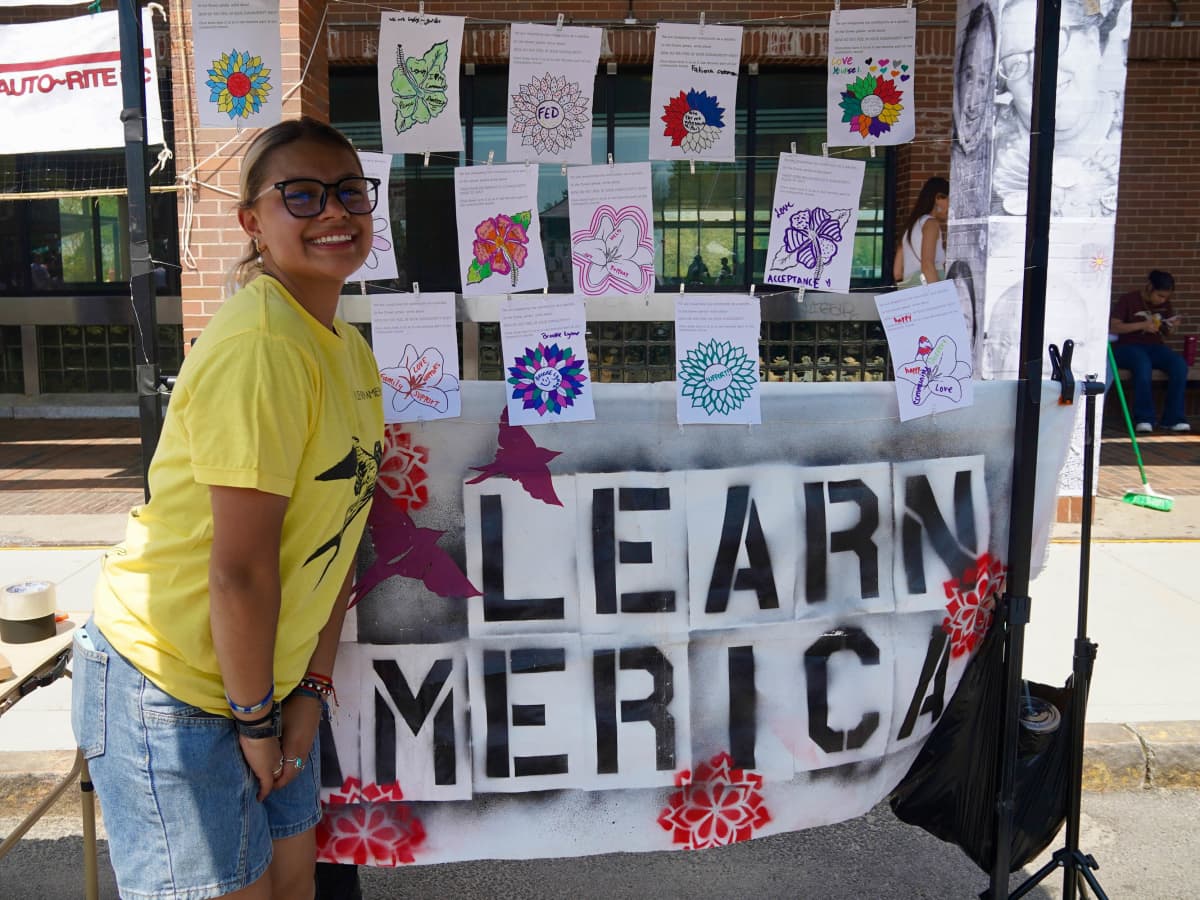 Stand of I Learn America at the Wake Up the Earth Festival.
Laying the Groundwork: Story First, Then Photo
At ILA, story comes before photo. Across all sites — Three schools in Boston (MA), 8 Schools in Broward County (FL), 9 schools in Lee County (FL) and the International High School at Langley Park (MD) — youth began with reflection: Where do you feel joy? Who are you becoming? What do you want your community to know about you?
“We carried out many actions with Inside Out, but this school year, we aimed to make our impact greater than in previous years,” said Katheryne Diez, ILA Florida Facilitator. “Our inspiration came from volunteering at Bastille Day in New York in the summer where we learned from INSIDE OUT how to carry out an action. It reminded us of how powerful it is to celebrate people’s faces and stories— not just through words, but by showing the world: this is who we are.”
In Maryland, the ILA Youth-photographer Ameer reflected on what it meant to bring this process into the classroom:
“I used my photography skills in the Inside Out project to boost students’ confidence. Feeling seen and proud helped them open up and tell stronger, more honest stories in the I Learn America process.”
This merging of visual storytelling with narrative writing became a hallmark of the ILA-IO collaboration. In Boston, students not only took portraits — they also collected written reflections from participants, many of whom preferred anonymity due to immigration-related concerns. These alternative expressions were displayed alongside the posters, ensuring everyone could contribute to the action in a way that felt safe.
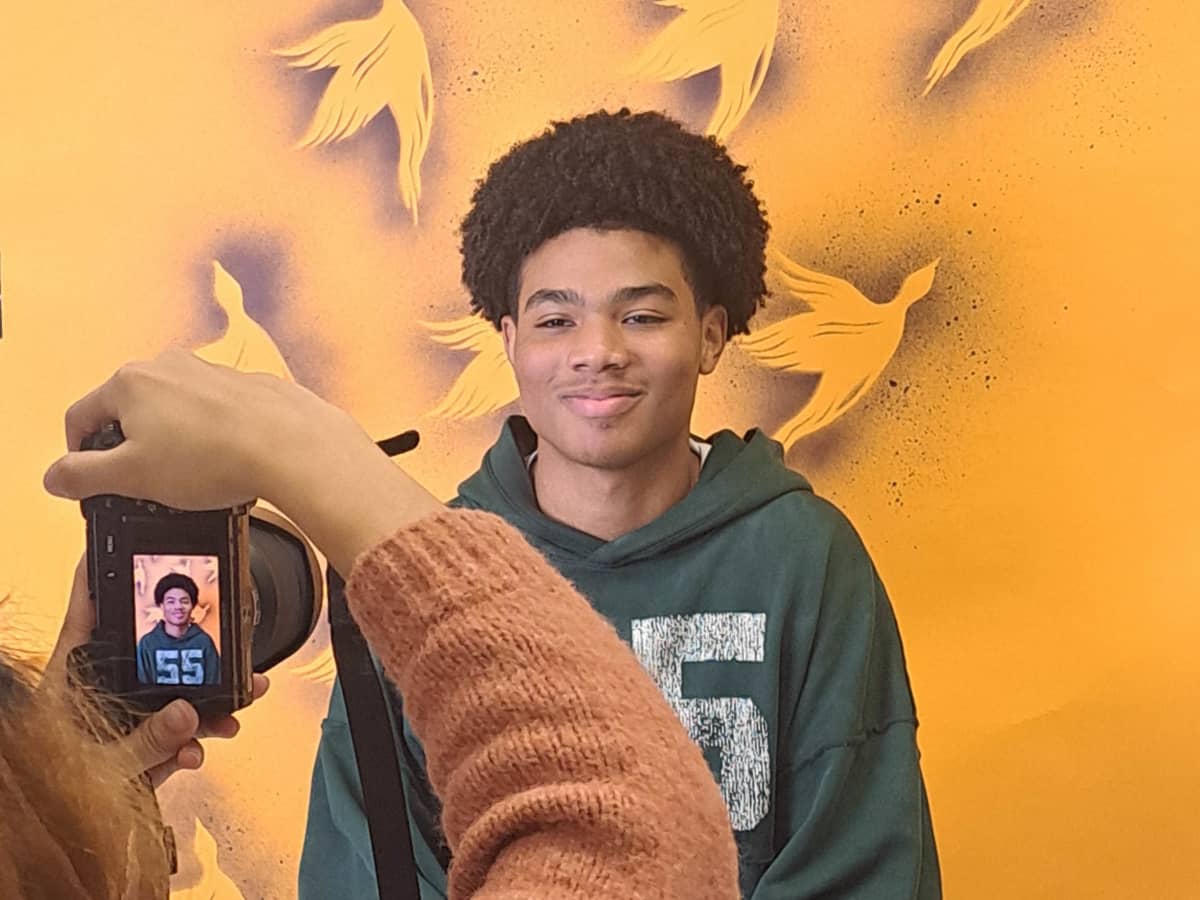 Photoshoot for the Inside Out Project with custom background.
The Photobooth as a Site of Joy and Belonging
At the heart of this year’s collaboration between I Learn America and the Inside Out Project were pop up photo-booths — not just as a tool for capturing portraits, but as a mobile storytelling space, a community connector, and a platform for dignity.
Wherever it was set up — whether in a public school hallway, a courtyard, a barbershop, or a neighborhood bodega — the photobooth invited people to pause, be seen, and be celebrated. At Margarita Muñiz Academy in Boston, students helped take the photobooth into the community: activating it at local businesses across Jamaica Plain, including restaurants, barbershops, and grocery stores.
“One of the business owners told us how thankful she was to have a space to express herself and be recognized through photography,” Flori added. “People hyped each other up. Even those who missed the booth are already asking to be included next time.”
These interactions sparked unexpected conversations, laughter, and moments of vulnerability — as people from different generations and cultural backgrounds shared their “happy places” and hopes for their neighborhood.
“It wasn’t just about taking a photo,” said Flori, an ILA Youth Facilitator. “It was about building trust. People opened up because they saw students leading — and that made the booth a space of joy, not judgment.”
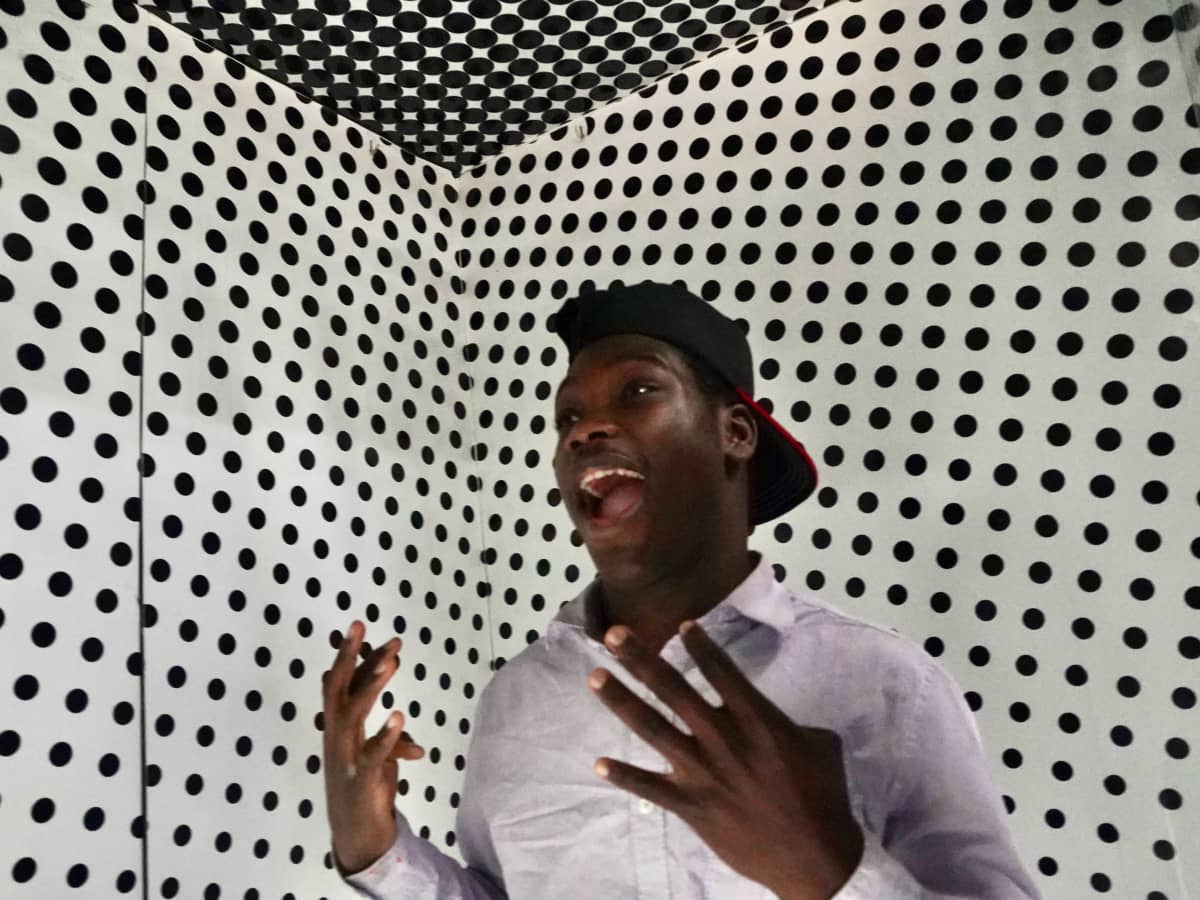 Inside the Inside Out Photobooth at Horace Mann School for the Deaf.
In Florida, we worked in close partnership with Broward County Public Schools and Lee County Public Schools, ILA and Inside Out brought the activation to 15 schools — 7 in Broward and 8 in Lee County — over the course of several months. At each site, hundreds of students, staff, and school leaders stepped in front of the camera.
Facilitators created an atmosphere of celebration and care: cracking jokes, offering compliments, playing music, and reminding each participant that their presence matters.
“At first, it was hard to get students to want their photo taken,” Ameer said. “But I broke the ice with some jokes and one-on-one conversations. Once they saw examples of other Inside Out projects, they got it. They were excited to be part of something bigger.”
“It wasn’t just a photo day,” said Katheryne, ILA’s Florida facilitator. “It was a belonging day.”
The photobooth helped schools create new traditions — days where the focus wasn’t on testing or behavior, but on joy, identity, and connection. Teachers, social workers, principals, and custodians all participated, showing students that every member of the school community has a story that matters. In several schools, portraits were printed and displayed alongside student writing, artwork, or quote cards, turning schools into story walls.
And most importantly, the photobooth created a moment of shared humanity — a pause in the daily rhythm of school life to smile, be seen, and stand proud.
“We’ve done a lot of storytelling with I Learn America,” said Katheryne, “but with Inside Out, those stories moved from the page to the public eye. They filled our schools with faces of belonging — and reminded every student, you are not invisible.”
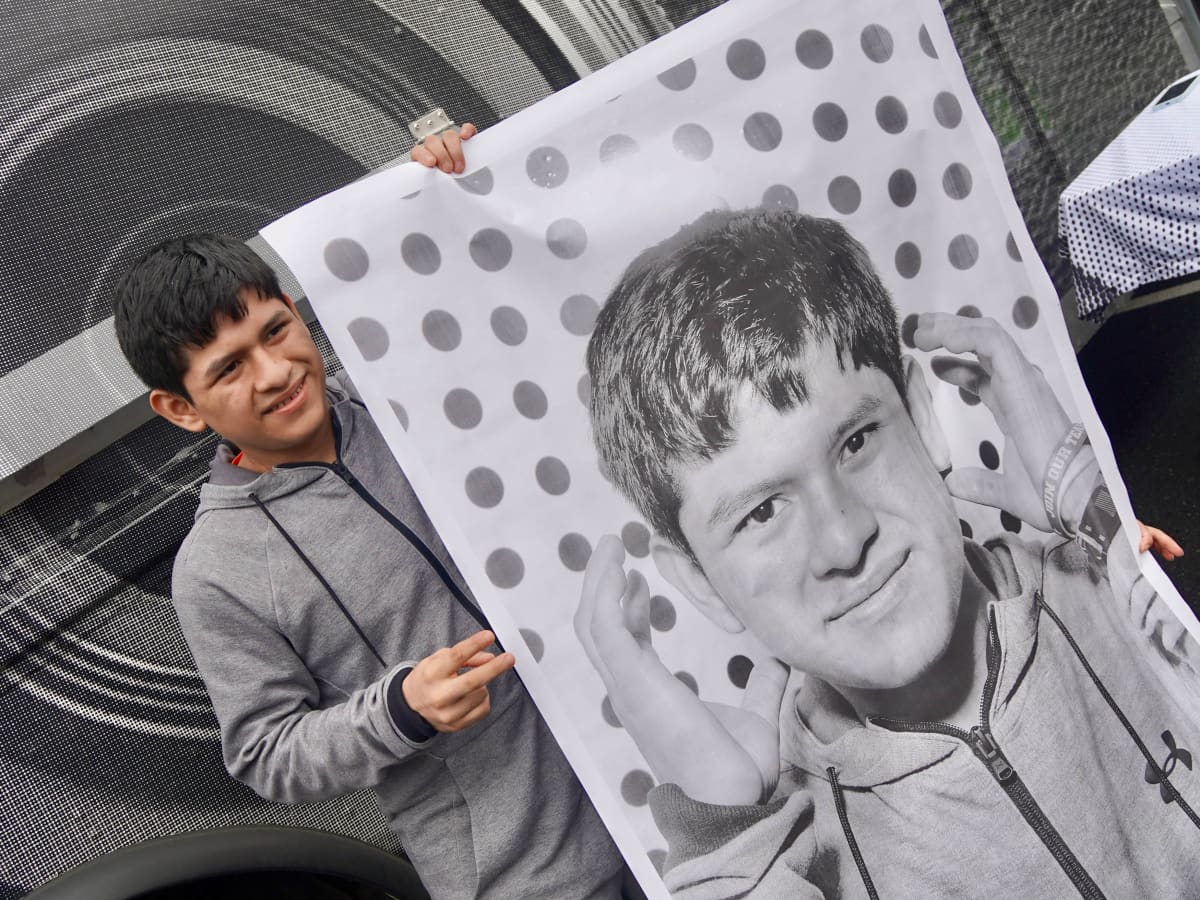 Student receiving his portrait at Horace Mann School for the Deaf.
Pasting Actions: From Private to Public — Turning Schools into Storywalls of Belonging
The pasting phase of our Inside Out collaboration was where everything came together — portrait, story, and place — in a bold, physical expression of visibility and pride. Across our partner schools, the pastings were acts of public storytelling, collective authorship, and community affirmation.
Nowhere was this more powerfully felt than at Boston International Newcomers Academy (BINcA) — a school where students from over 40 nations come together to learn, grow, and lead. This year, in collaboration with I Learn America and Inside Out, BINcA students transformed their campus into a living tribute to immigrant identity and youth leadership.
“This initiative brought joy to a lively community space,” said Toni, a BINcA educator. “It extended a warm welcome to our neighbors and civic leaders alike — showcasing not just who our students are, but what they are capable of when given the tools and trust to lead.”
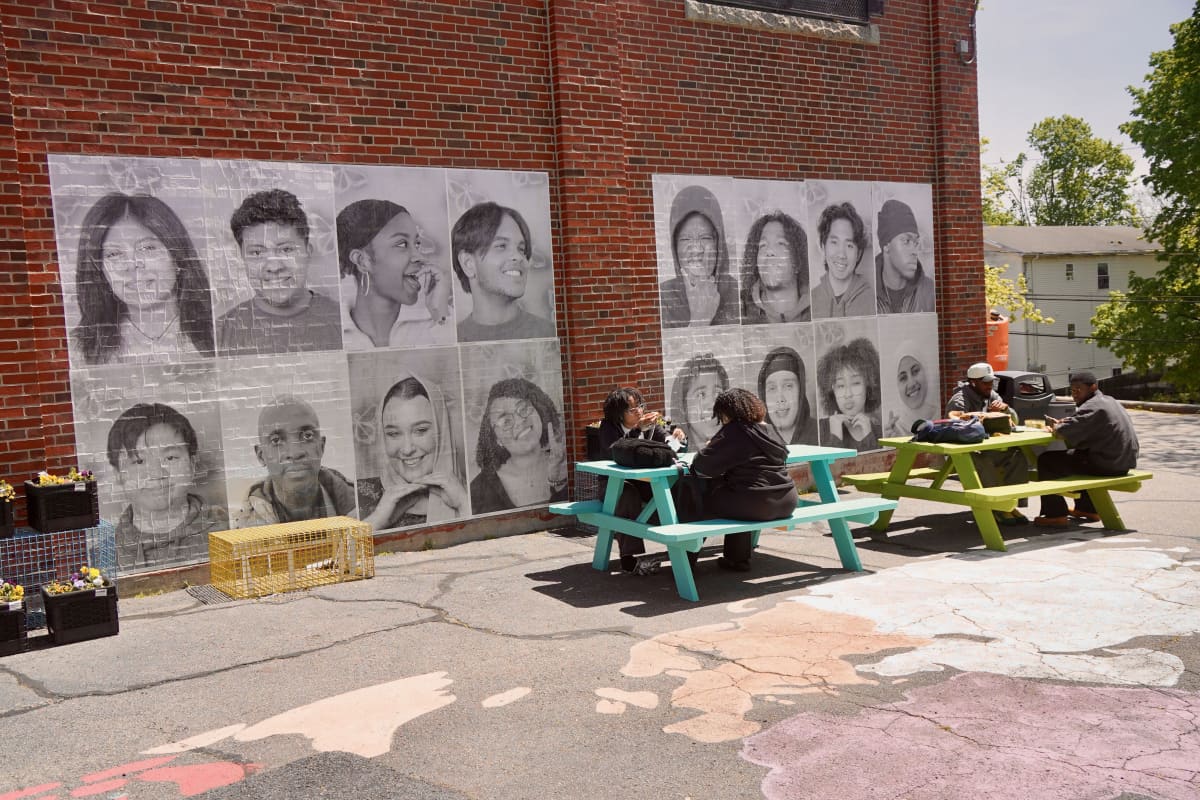 The new 'School Yard for Everyone' at BINcA's.
What began as sixty large-scale portraits pasted by BINcA students during spring break soon grew into something even larger when the Inside Out photobooth truck rolled into BINcA’s courtyard. That afternoon, nearly 200 members of the school and surrounding community — including students, teachers, the principal, volunteers, Boston City Councilor, and the State Senator — stepped in front of the camera.
“Our students climbed ladders, passed buckets of paste, and transformed into artists in action,” said Flori, one of the ILA facilitators. “They weren’t just featured in the project — they became the project.”
One student later said, “Our school is actually cool now.”
The Inside Out truck also visited Horace Mann School for the Deaf, where students, families, and staff came together to paste over 200 portraits on the walls of their new school building. For a community undergoing transition, this act of visual claiming became a powerful statement of identity and belonging — turning a new space into their space, and making the school truly feel like home.
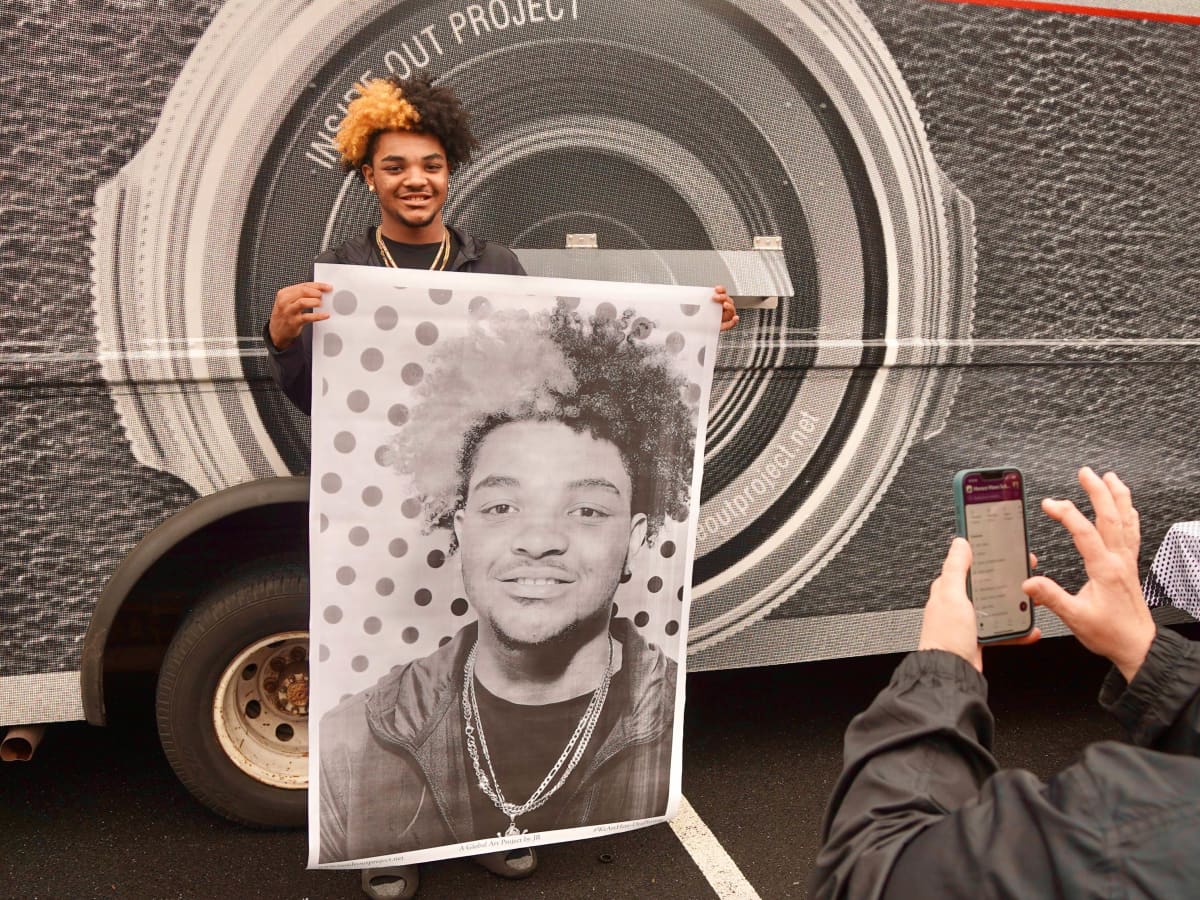 Student, coordinator and interpret at Horace Mann School for the Deaf, showing his portrait
The ILA Team then brought their energy and creativity to the Wake Up The Earth Festival at the Stony Brook T Station in Boston. BINcA and Muniz ILA Youth Fellows helped run the photobooth, welcomed community members, and even photographed the Mayor of Boston and her daughter.
At Margarita Muñiz Academy, students worked closely with ILA youth facilitators to engage their wider Jamaica Plain neighborhood. By setting up pop-up photobooths in local businesses — from barbershops to grocery stores — students connected deeply with their community. These portraits, featuring neighbors and classmates, were then pasted across the school campus, community spaces, and beyond — helping blur the lines between school and neighborhood, youth and adult, story and place.
“Our goal was to create a space for people to share their stories and be seen,” Flori shared. “And by pasting those faces on the walls of the community, we reminded people that they belong here — that their stories matter.”
These actions didn’t just beautify space — they transformed it. At BINcA, the pastings became part of a larger student-led effort to convert an abandoned, litter-filled schoolyard into a welcoming park now known as The School Yard for Everyone. The portrait murals brought the final touch — tying the space to the people who made it. The May 15 ribbon-cutting celebrated not only a new physical space, but a new spirit of ownership, pride, and civic leadership.
“The Inside Out activation served as a catalyst,” Toni reflected. “It empowered our students to realize their vision — to organize, beautify, and make something lasting for their peers and for Boston.”
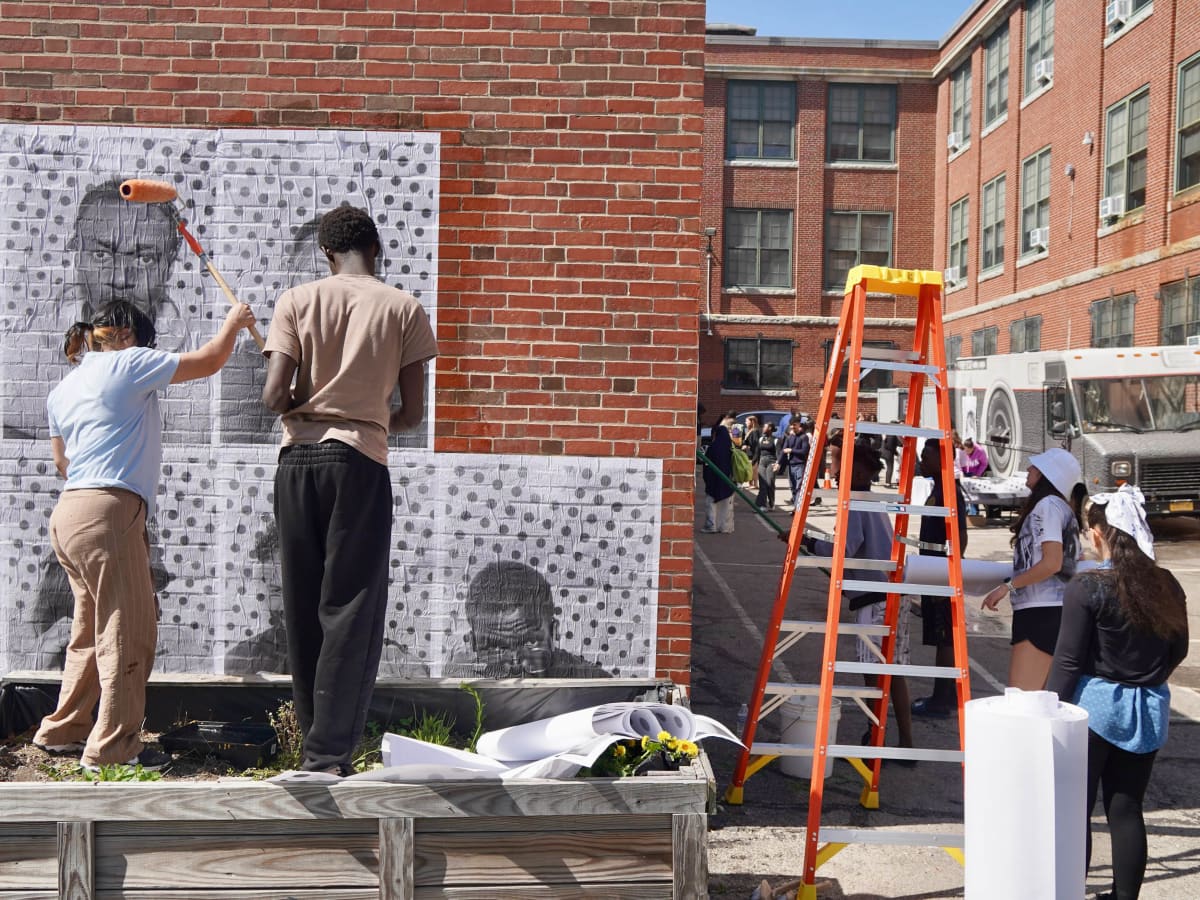 BINcA's students pasting the courtyard of their school
Across all locations, the public display of these portraits made students — many of them newly arrived to the U.S. — feel not only visible, but valued. Parents paused to find their children’s faces. Teachers and custodians smiled at their own portraits. Children from after-school programs pointed in delight when they spotted someone they recognized.
“At one of our Florida schools, we pasted the portraits along the parent drop-off loop,” said Katheryne, ILA facilitator. “Some parents saw their child on the wall for the first time — you could see how deeply it moved them.”
Going from private reflection to public recognition is central to both the Inside Out mission and the core of I Learn America’s work: to place immigrant-origin youth not at the margins of our stories, but at the center. Through every pasting, mural, and photobooth, our students didn't just declare “I am here” — they reimagined their schoolyards, sidewalks, and city walls as declarations of community, connection, and pride.
Uplifting Communities, Navigating Complexity
As powerful as the process was, it also required deep care, sensitivity, and trust — especially in immigrant communities where the fear of being seen, named, or recorded can carry very real consequences. In a time when being an immigrant — or even being perceived as one — can feel dangerous, stepping in front of a camera to be publicly displayed on a wall isn’t just an act of participation. It can feel like a risk.
This fear was especially present in Boston, where students and community members expressed concern about visibility due to immigration status or personal trauma. For many, their instinct was to hide, to stay off the radar — not to volunteer their face for a public mural. And yet, with thoughtful facilitation and peer encouragement, something shifted.
“Due to the ongoing immigration laws, our project faced a lot of challenges,” said Flori, reflecting on the Boston activation. “Many participants and schools were hesitant to display their photos on public walls. We had to adjust — we invited people to share anonymously, to write instead of pose, to express what kind of love they need from their community to thrive.”
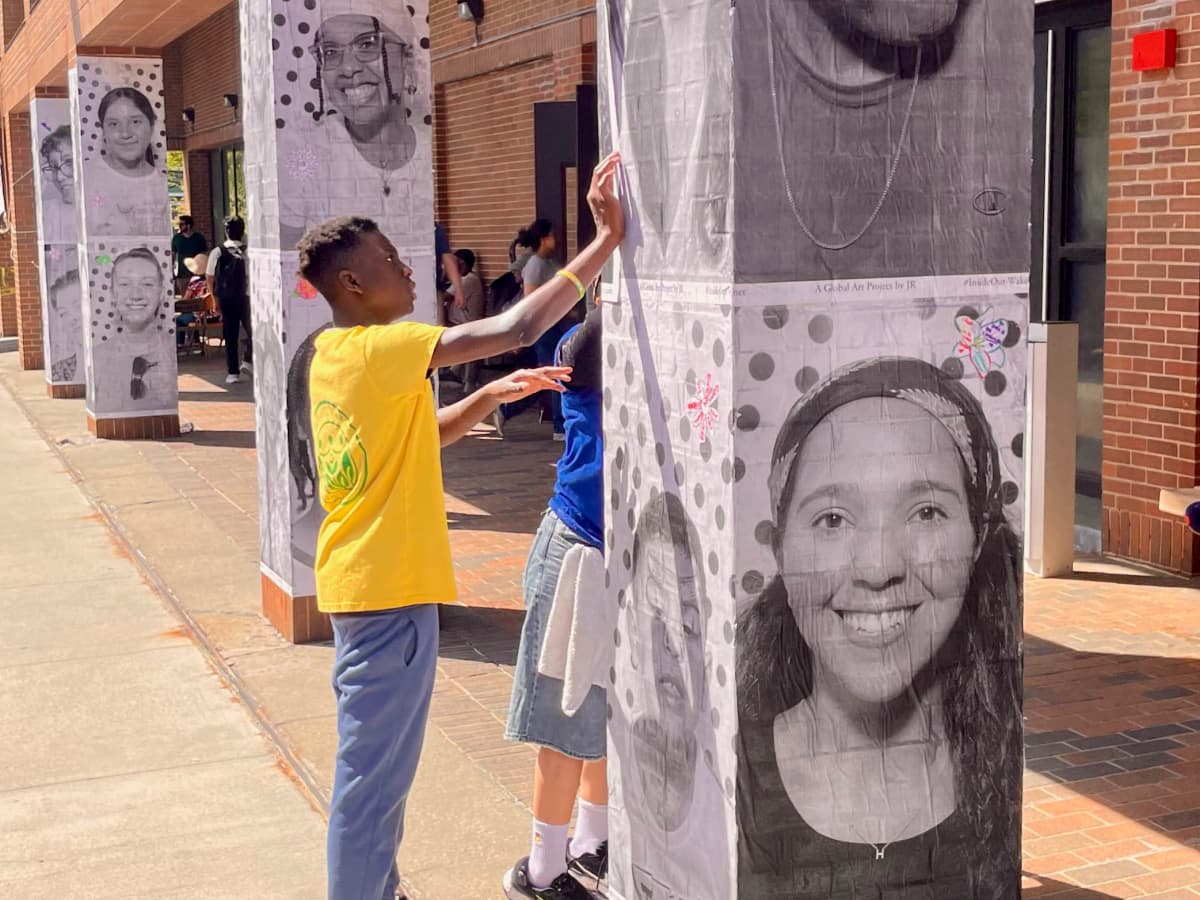 Few students from BINcA who came to the Wake Up Earth Festival after we went to their school and helped to paste.
This pivot allowed everyone to participate — and as the walls began to fill with portraits, something unexpected happened. Those who initially hesitated saw the faces of their peers, their neighbors, their teachers. They recognized that they were not alone. The act of stepping into the photobooth or pasting a portrait became less about exposure and more about belonging.
“Once the posters were up, people started asking how they could be part of it,” said Katheryne. “There was pride, excitement, even joy. The walls reflected who we are — and that created safety.”
“The students went from fear to fire,” said Ameer. “They realized, if we all do this together, it’s not just about me being seen — it’s about us showing who we are. There’s power in numbers. The more faces we added, the stronger the message became.”
At Horace Mann School for the Deaf, this collective visibility took on additional meaning. The students, families, and staff — many of whom had just transitioned to a new school building — gathered to paste over 200 portraits across their new walls. Through laughter, signing, teamwork, and shared effort, they didn’t just decorate their space. They claimed it.
These actions became declarations: We are here. We are many. We belong.
Together, we turned fear into agency, hesitation into pride, and isolation into collective voice. And in doing so, we upheld one of the core tenets of both I Learn America and the Inside Out Project — that storytelling, when rooted in trust and shared purpose, doesn’t just change perceptions. It transforms communities.
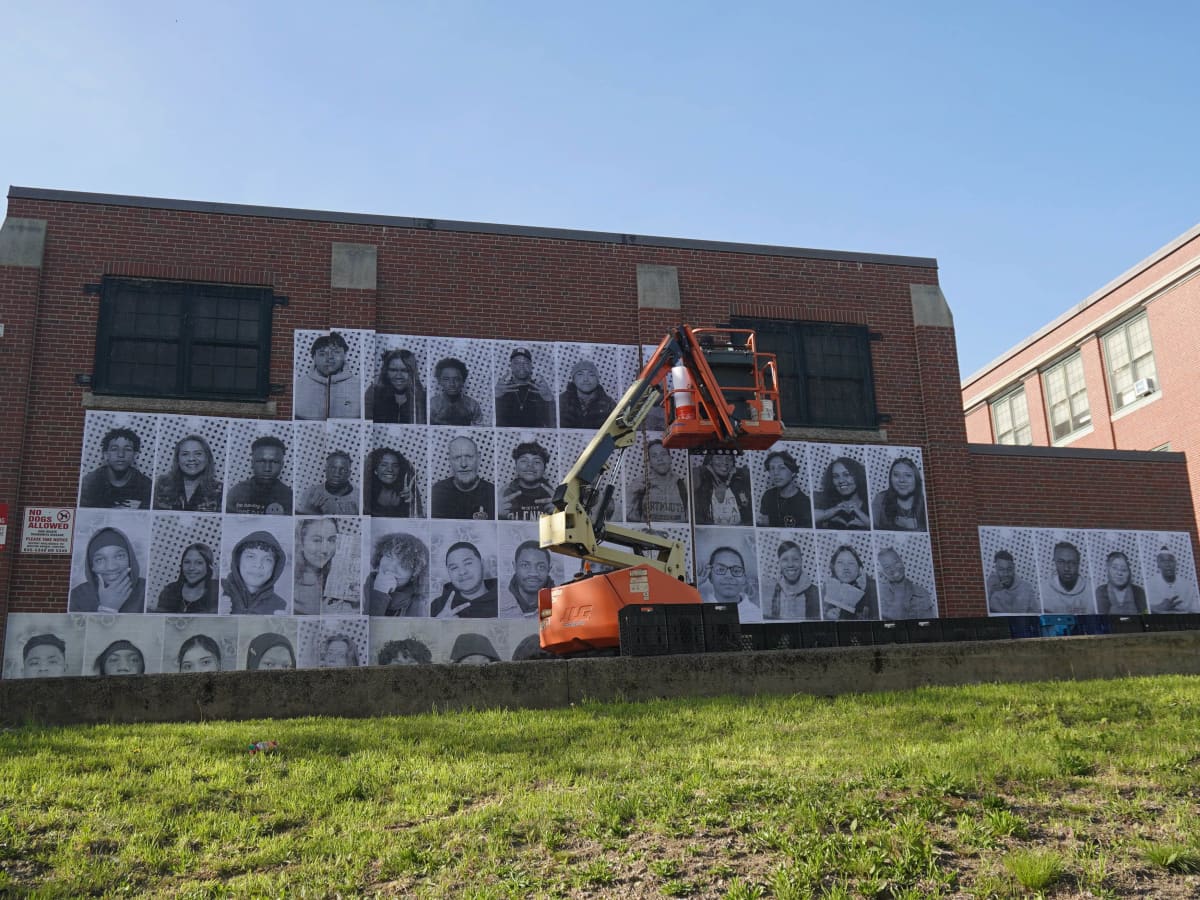 Finishing the pasting at BINcA's
Impact That Ripples Out
What began as storytelling in the classroom now lives on in storefronts, community walls, and family albums. Students feel seen. Families feel celebrated. Schools feel more connected to their communities. And more people want to join in.
“The participants went crazy happy with the photos,” Ameer said. “The parents were thrilled. The teachers and principals thanked us for how everything turned out.”
The partnership between I Learn America and Inside Out has helped immigrant youth move from self-expression to public action — showing the world who they are, where they belong, and what they dream of building.